
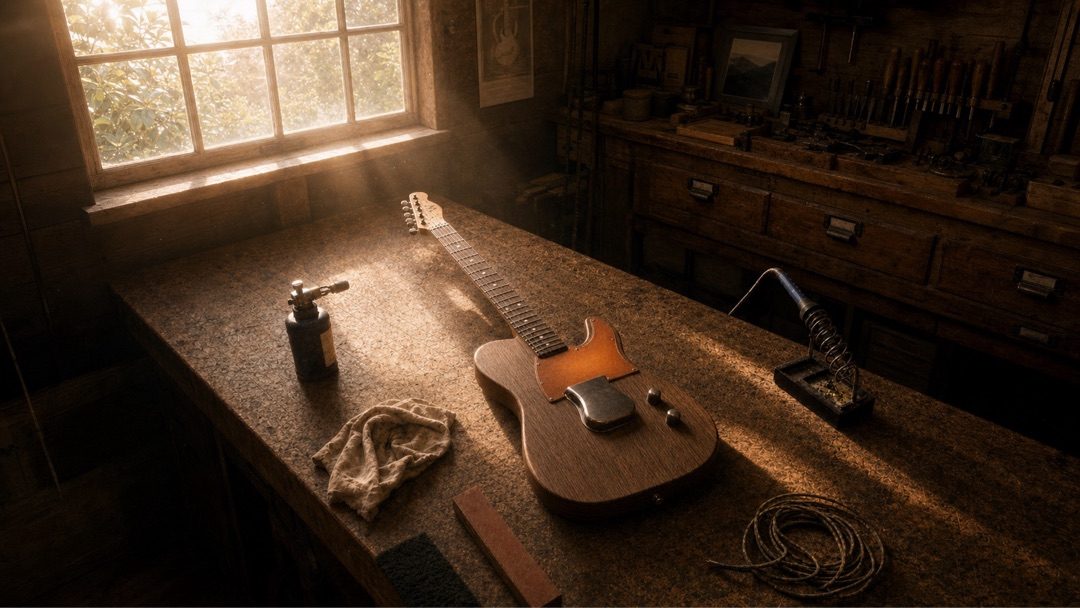
Many years.
Three generations.
Two people. One shop. Two sets of hands. The work is small on purpose.
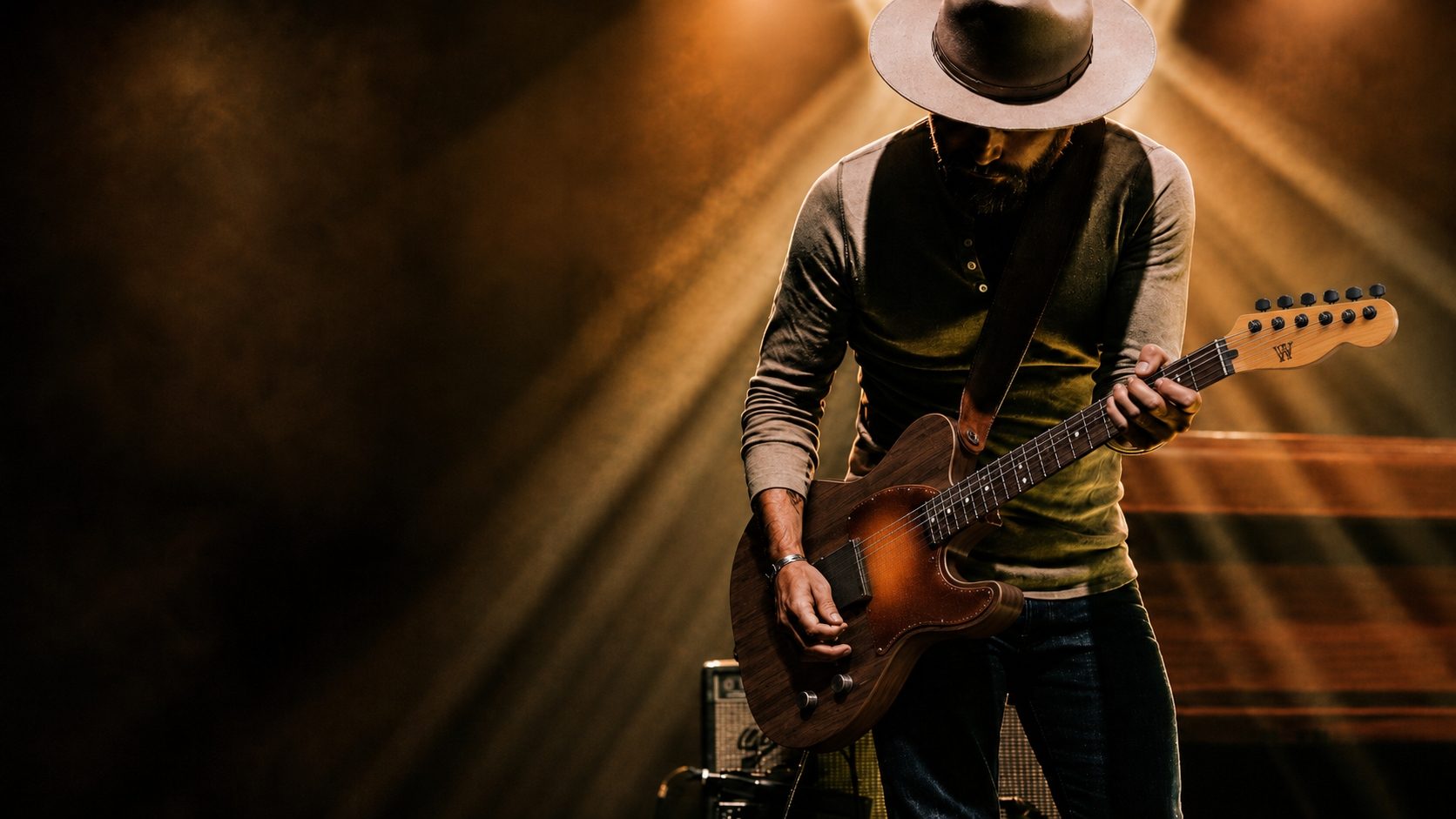
He played the world. Then he came home to build it.
Preston Wimberly spent more than a decade as a professional touring guitarist: lead guitar for The Wild Feathers, signed to Warner Bros. Records, and later with Jamestown Revival. He played festivals, late-night television, theaters, and arenas across the United States and abroad.
The guitars that went with him on that road were the ones that held up: real wood, honest finish, nothing trying to look like something it wasn't. When that chapter closed, those instruments were the reference point for what came next.
Wimberly Guitars is what came next. The same hands. The same ear. The same standard. Built one at a time in Texas, with his father Jim.
A letter.
I spent a long stretch in and around the music industry, on stages, in vans, in studios, in a new city most mornings. Signed to a major label. That life teaches you movement. Venues change. Sounds change. Bands change. Guitars come and go.
Over the years I came to value the rare things that don't. The instruments that stayed with me through all of it were the ones made from real materials, by someone who cared, built to be played for a long time. They got better the more life they saw. The finish checked. The metal dulled. The neck wore in. Every mark was part of the record.
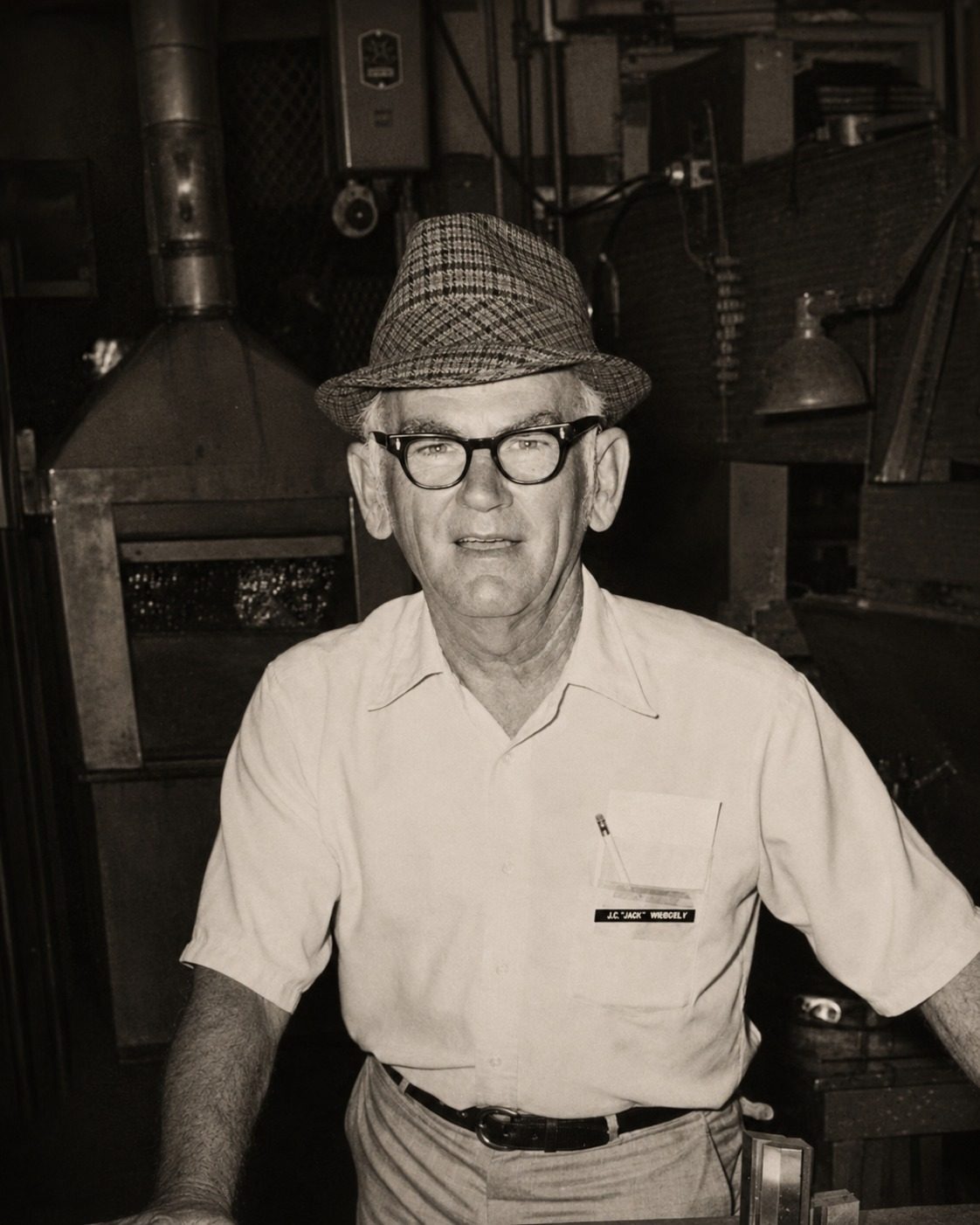
Now the work is shared with my father, Jim. His father, Jack Wimberly, worked his whole career at Hughes Tool in Houston, where steel, oil, and patience were not metaphors. That inheritance belongs in the guitars.
There is another part of the family story too. My mother, Margie, was deeply involved in the equestrian world, and the house I grew up in was full of saddles, tack, reins, and leather gear. She admired the craftsmanship in those pieces: the stitching, the hardware, the way good leather softened with use but still held its strength. That memory is part of why leather belongs here. It is not decoration. It is something familiar, something inherited, something built to take on age honestly.
That is what Wimberly Guitars is for. Instruments built from wood, metal, leather, and wire. Instruments that welcome age instead of hiding from it. Instruments that feel like companions, not products.
A father-and-son shop.
Wimberly Guitars is the father-and-son workshop of Preston and Jim Wimberly in Texas. Preston came out of touring, studios, and stages before turning the same hands and the same ear to building guitars one at a time.
Jim brings the other set of hands. His father, Jack Wimberly, Preston's grandfather, worked his whole career at Hughes Tool in Houston. Preston's mother, Margie, brought another material memory into the family: horses, saddles, tack, and the kind of leatherwork made to weather real use. The shop carries both inheritances forward: steel, oil, wood, leather, and work that has to hold up.
The work is small on purpose. Every instrument that leaves the shop is built in that family line and signed with one small W.
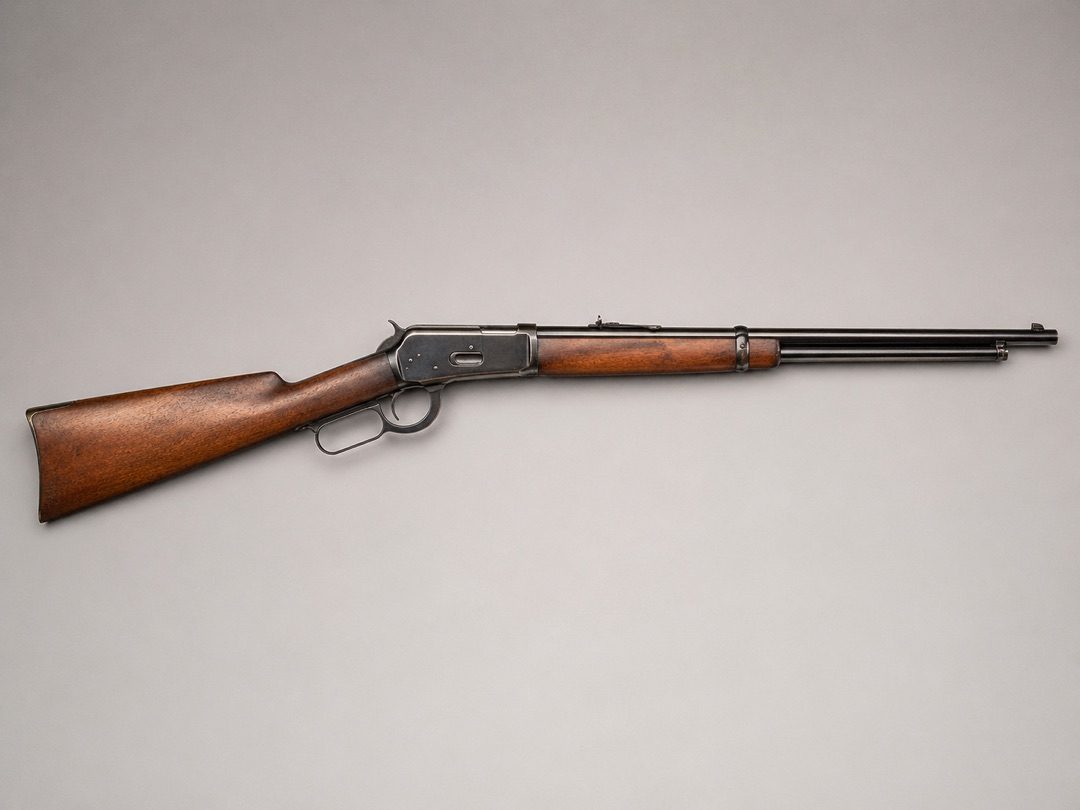
The reference object on the bench is a 19th-century lever-action rifle: oiled walnut, a case-hardened receiver, blued steel, and hand-fitted parts. Its materials and construction guide the work.
When in doubt about a material, a finish, or a layout, we ask one question: would this look right on an old rifle?
How a Wimberly is built.
Every guitar is built in a father-and-son shop, under two sets of hands. The process is slow on purpose.
Wood
Solid walnut blanks selected for grain, density, and weight. The body is cut, carved, and sanded by hand. The neck is fitted to the body.
Oil
Tru-Oil is hand-rubbed into the wood in thin coats. Each coat is wiped, cured, and rubbed back. Built up over days. No varnish, no poly, no spray.
Leather
8 oz veg-tanned leather cut to the silhouette by hand, edges burnished, sunburst dyed from amber to walnut. Patterns engraved in the shop, for this guitar, on this body.
Metal
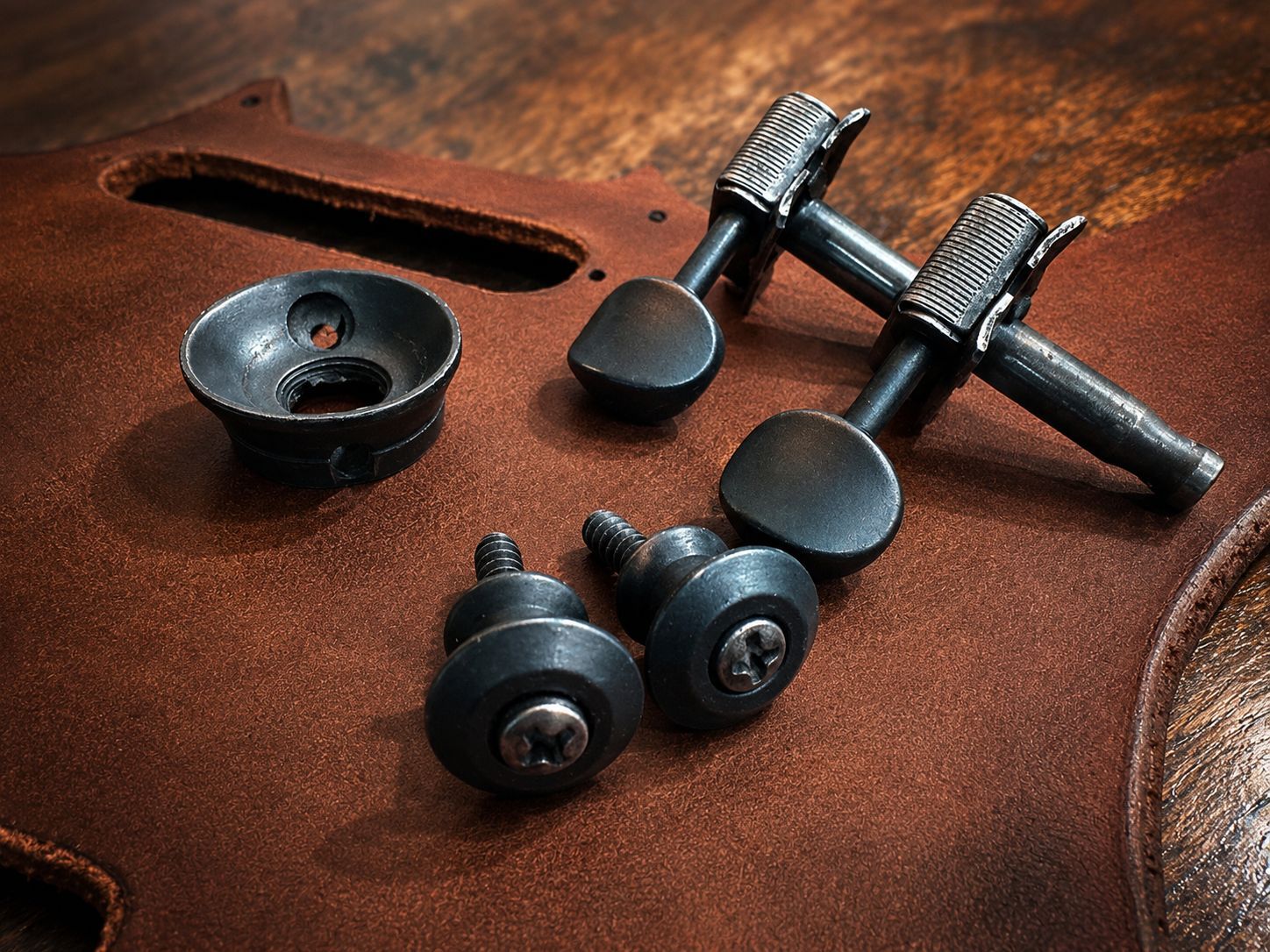
Hardware is finished by material, the way a gunsmith would. Steel is blued, blackened, or fire-colored to build color into the surface. Nickel is JAX-blackened, lightly carded, and sealed. Brass is left raw to patina under the hand.
Seal
Metal is protected with a thin oil or wax wipe, then worked almost dry like a blued barrel. It should look handled, not coated.
Assembly
Pickups, Gunstreet 50s wiring harness, tuners, and bridge are installed. The harness is hand-soldered. The leather pickguard is fitted last.
Mark
The headstock face receives one small W, burned into the Tru-Oil-finished maple. No decal. No inlay. No surrounding ornament. The mark stands alone.
Setup
Frets are dressed. Action and intonation are dialed in. The guitar is played, adjusted, and played again, until it answers.
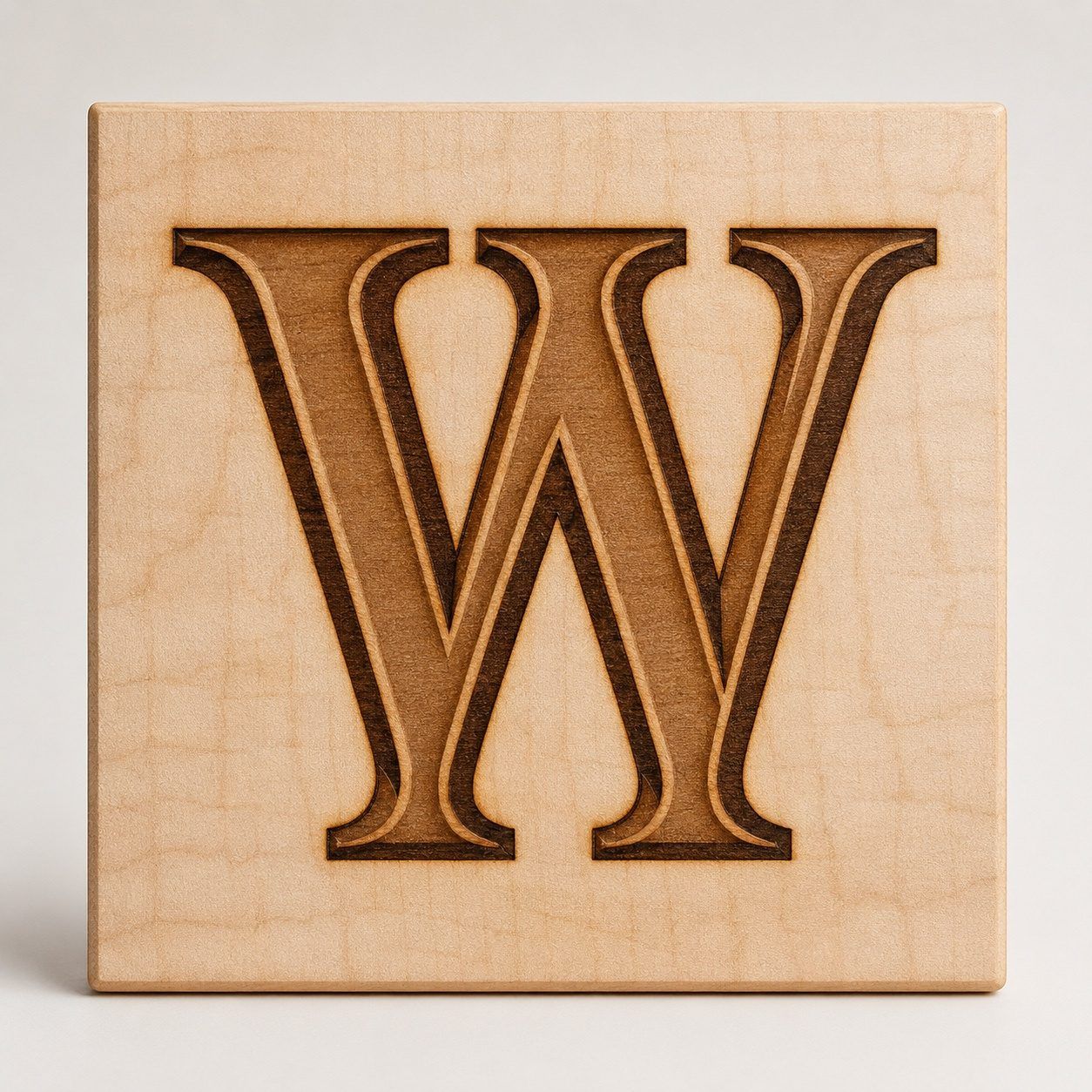
The W.
The maker's mark is the W, a slab-serif capital, narrow proportions, no italic, no flourish. Branded into pale maple with a heated iron. The slightly fuzzed scorch edge from the brand is part of the mark.
One W per guitar. Always small, sized like a stamp on a rifle barrel. Burned into maple, never printed, never decaled, never inlaid in plastic or pearl. The W stands alone on the headstock face.
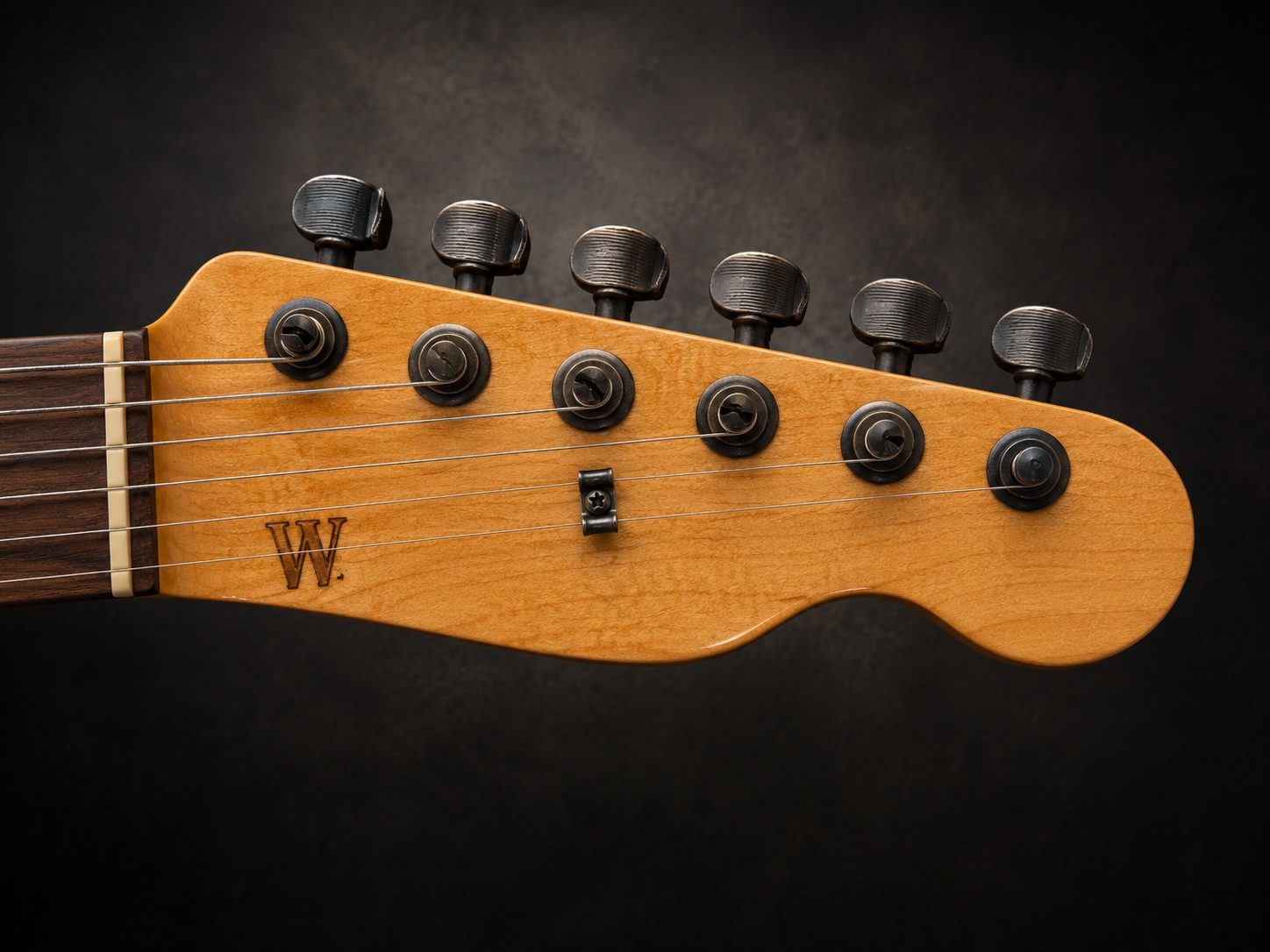
One mark. Six tuners. Nothing extra.
The headstock carries one mark: a small burned W set into Tru-Oil-finished maple. No decal. No inlay. No surrounding ornament. The W stands alone.
The tuners are vintage oval Gotoh-style machines, JAX-blackened, lightly carded after the blackener sets, and sealed with a thin oil or wax wipe. The functional screws are gunmetal. Darkened nickel in a gunsmith language, not relic work, not paint, and not modern black hardware.
The wood is what it is. The steel takes blue and oil. The nickel takes blackener, carding, and oil. The leather darkens with use. Built to age, not to look old.
Join the build waitlist.
Two models, one workshop. Each built by Preston and Jim Wimberly and signed with the W. New builds are currently waitlisted; once a slot opens, build time is 12–16 weeks from deposit to delivery.